


2026
Sea-Air vs. Air Freight for Time-Sensitive and Cost-Conscious Shipments
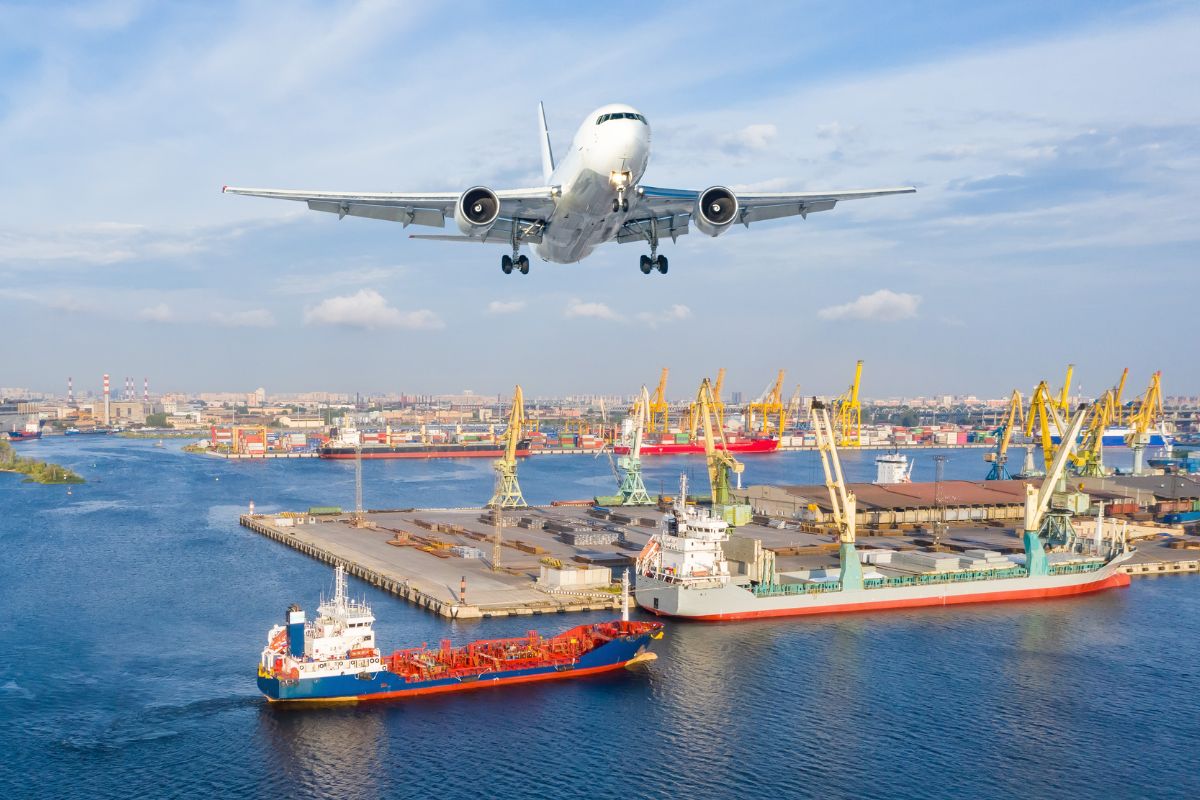
If you are a business owner or a logistics manager, and you are looking to move international high priority cargo quickly and cost-effectively, there are two main options, pure air freight and the hybrid sea-air model.
At first glance, it might seem like a simple choice between speed and price. However, the reality of modern shipping involves a delicate balance of carbon footprints, inventory turnover, and local port efficiency.
If you are new to this, think of it as choosing between a direct flight and a flight with a long layover that happens to be much cheaper. Both get you to the destination, but the experience and the cost vary wildly.
Understanding these differences is the key to maintaining a competitive edge.
Pure Speed vs. Hybrid Transit: Comparing Lead Times
When we talk about Air Freight, we are talking about the "Express" lane.
In 2026, a shipment leaving a factory in Vietnam can arrive at a warehouse in Toronto in as little as 48 to 72 hours. This is because the cargo never leaves the airport ecosystem. It is loaded onto a freighter or the belly of a passenger plane and flown directly to its destination.
Sea-Air is a different beast entirely. It is a multimodal relay race. Your goods start their journey on a container ship, perhaps leaving a port in Asia. They sail to a strategic transit hub, such as Dubai, Singapore, or Algeciras.
Once they arrive at the port, the container is trucked to a nearby airport, and the cargo is transferred to a plane for the final leg of the trip.
As a result, the delivery times generally fall under these averages:
- Air Freight Transit: 3 to 7 days on average globally.
- Sea-Air Transit: 14 to 22 days on average.
The Trade-off: You are essentially trading about two weeks of time for a massive reduction in your shipping invoice.
For many businesses, that two-week difference is manageable if the shipment is planned in advance.
However, if your product has a short shelf life or is part of a "just in time" manufacturing process, those extra days in the sea-air relay could be a dealbreaker.
Cost Analysis: Why Sea-Air Is Easier on the Bottom Line
The biggest hurdle with pure air freight is the price tag. Airlines charge based on "chargeable weight," which is a calculation of either the actual weight or the volume of the box. If you are shipping something light but bulky, like pillows or large plastic components, you will pay a fortune to fly "air."
In 2026, fuel surcharges for aviation are also high as the industry transitions to sustainable aviation fuels. This makes air freight five to ten times more expensive than traditional ocean freight. This is where sea-air becomes a financial lifesaver.
By using a ship for the longest leg of the journey, you take advantage of the massive economies of scale offered by 20,000 TEU container ships. The expensive flight portion is reserved only for the final distance.
On average, a sea-air solution can save you 30% to 50% compared to a pure air shipment.
Comparing Environmental Impact and Carbon Footprints
Sustainability is no longer a buzzword, it is a legal and ethical requirement for many companies in 2026. If your brand identifies as "eco-friendly," your shipping choices are part of your product's story.
Air Freight is the most carbon intensive method of transport. A cargo plane burning tons of fuel to stay aloft is simply not efficient from a CO2 perspective. If you rely exclusively on air, your corporate carbon report will reflect that.
Sea-Air offers a middle ground, as modern container ships are becoming increasingly green, utilizing LNG (Liquefied Natural Gas) or even ammonia-based fuels.
By shifting 70% of the travel distance to a ship, you significantly lower the total emissions of the shipment. This allows you to meet your "time-sensitive" goals without completely blowing your sustainability targets. To give you a quick sustainability breakdown:
- Air Freight: Highest emissions per ton-kilometer.
- Sea-Air: Medium emissions (significantly lower than air).
- Ocean Freight: Lowest emissions (but slowest).
For a cost-conscious business that also cares about its 2026 ESG (Environmental, Social, and Governance) scores, the hybrid model is often the winning strategy.
Cargo Safety and Handling: Analyzing the Risk of Each Mode
A major concern for any shipper is whether their goods will arrive in one piece. When you compare these two modes, you have to look at how many times the cargo is touched by human hands or machines.
Pure air freight is generally safer for fragile items. The goods are packed onto a pallet or into a specialized aircraft container at the origin and typically stay that way until they reach the destination airport. There is minimal movement and very little opportunity for theft or damage in the highly secured airport zones.
Sea-Air involves a "transload" phase. This is the moment when your cargo is taken out of an ocean container and moved into an air pallet. Every time cargo is moved from one vehicle to another, the risk of a "mishap" increase.
However, in 2026, transit hubs like Dubai's Logistics City have perfected this. They use automated sorting and high-speed transfer tunnels that minimize human contact. While the risk is technically higher than a direct flight, it is still far safer than a standard ocean-only shipment that might sit in multiple ports for weeks.
Inventory Management: How Each Mode Affects Your Cash Flow
Money tied up in inventory is money that isn't working for your business. This is a concept many new shippers overlook. When your goods are sitting on a ship for 40 days, you have "dead capital." You have paid the manufacturer, but you can't sell the product yet.
Air freight solves this by getting products onto shelves immediately. You can maintain lower stock levels because you know you can restock in a few days. This improves your "cash-to-cash" cycle.
Sea-Air, however, provides a strategic buffer. It is faster than the slow boat, which means your capital isn't tied up for nearly as long as a traditional ocean shipment. That is why many savvy retailers in 2026 are using a "split" strategy that looks like this:
- They fly 10% of the stock by Air Freight to handle the immediate launch.
- They send the remaining 90% via Sea-Air to keep the shelves full without the high cost of flying the entire inventory.
This balanced approach allows you to be responsive to the market while keeping your CFO happy with the profit margins.
Assessing Reliability: Weather, Congestion, and Schedule Certainty
Air Freight is remarkably consistent. Flights are frequent, and even if one is delayed, the backlog is cleared quickly. Airlines follow rigid schedules that rarely change. If you have a strict deadline, such as a trade show or a contract penalty, air is the only way to guarantee peace of mind.
Sea-air is dependent on the reliability of two different industries. If there is a storm in the Indian Ocean, your ship might be delayed. If there is congestion at the transit hub's airport, your air leg might be pushed back. While these hubs are designed for speed, they are more susceptible to "compounding delays" than a direct flight.
Making the Final Choice for Your Specific Shipment
So, how do you decide which way to go? It usually comes down to three questions:
- What is the value of the goods? High-value electronics almost always go by air because the cost of the insurance and the risk of theft on a longer journey outweigh the shipping savings.
- What is the "must-arrive" date? If the date is non-negotiable and only five days away, you have no choice but to fly.
- What is the weight-to-value ratio? If you are shipping heavy parts that aren't worth thousands of dollars per kilo, Sea-Air will save your budget from total exhaustion.
For many Canadian businesses in 2026, the sea-air route into Vancouver or through major US hubs has become the standard. It provides the agility needed for a fast-moving market without the premium price of 100% air transport.
By understanding these two distinct paths, you can build a more resilient supply chain. You stop being a passive participant in logistics and start being a strategist.
Whether you choose the speed of the sky or the efficiency of the hybrid model, you are now equipped to make the call that is best for your brand and your bottom line.
